
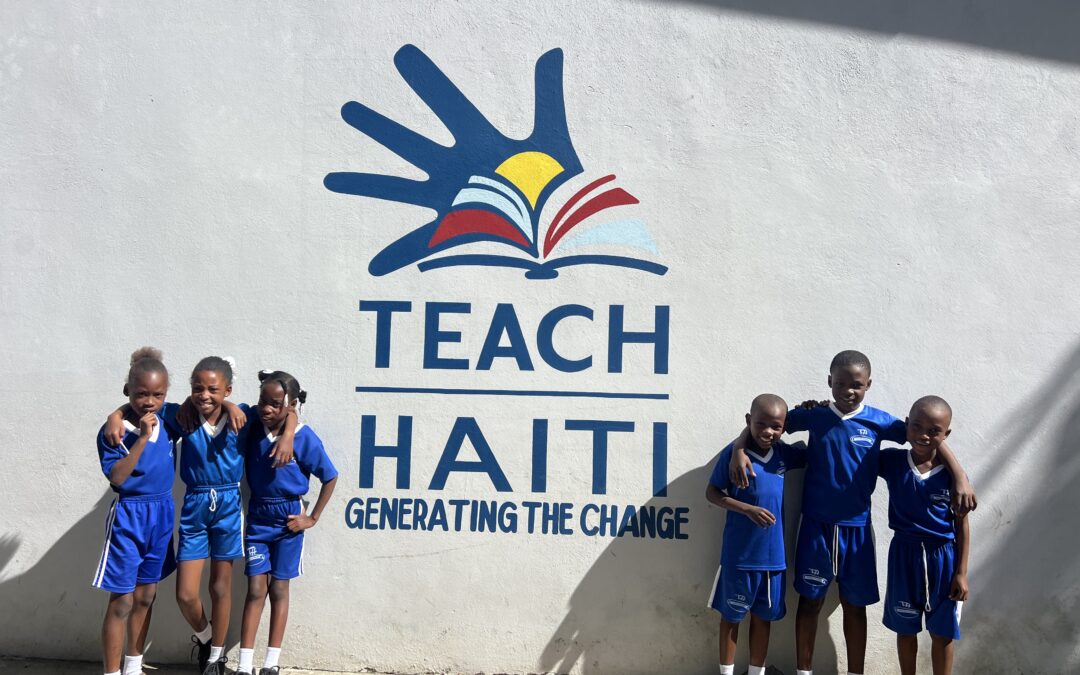
When people think about Haiti, they often think about natural disasters, political instability, or poverty. What many people do not realize is that one of Haiti’s greatest long-term challenges is access to education.
For millions of children in Haiti, school is not guaranteed.
In fact, only 20% of Haitian teenagers reach secondary school, which is the equivalent of high school in the United States. Nearly half of all children in Haiti never finish primary school. Adult literacy rates remain far below the regional average, limiting economic opportunity for entire generations.
These are not isolated problems. They are part of a larger education crisis in Haiti that continues to impact families, communities, and the future of the nation itself.
But there is hope.
Organizations like Teach Haiti are proving that when children are given access to consistent, high-quality education, lives can truly change.
Why Education in Haiti Is So Difficult to Access
Unlike many countries where public education is widely available, approximately 90% of schools in Haiti are privately operated. That means most families must pay tuition in order for their children to attend school.
For families already living in poverty, education can feel impossible to afford.
In rural areas especially, schools may lack:
- Clean drinking water
- Proper classrooms
- School supplies
- Trained teachers
- Reliable meals for students
Some children walk long distances to school. Others leave school early to help support their families. Many never return.
The result is a cycle that repeats generation after generation:
limited education leads to limited opportunity, which leads to continued poverty.
That is why improving education in Haiti is one of the most important investments anyone can make.
Why Education Creates Long-Term Change
Research from organizations like the World Bank consistently shows that education is one of the most effective tools for reducing poverty in developing countries.
Every additional year a child stays in school increases future earning potential, improves health outcomes, and strengthens local communities.
Education does more than teach reading and math.
It helps children develop:
- Leadership skills
- Confidence
- Job readiness
- Critical thinking
- Stability and hope for the future
In countries like Haiti, where economic opportunities can be limited, education becomes one of the strongest pathways toward long-term change.
When one child graduates, the impact often reaches an entire family and community.
How Teach Haiti Is Changing Education in Haiti
At Teach Haiti, education is approached differently.
Teach Haiti operates two school campuses serving hundreds of students through what is called the Complete Education Model — a holistic approach that focuses not only on academics, but also spiritual development, leadership training, vocational skills, nutrition, and community impact.
The goal is not simply helping students pass classes.
The goal is helping students build stable futures and become leaders who can help restore Haiti through the next generation.
And the results are already proving what is possible.
Teach Haiti students currently maintain:
- A 94% graduation rate
- A 100% national exam pass rate for six consecutive years
- Test scores consistently above Haiti’s national average
In a country where most students never reach high school, these outcomes are extraordinary.
Education in Haiti Is About More Than a Classroom
One of the biggest misconceptions about poverty is that academic education alone solves it.
In reality, children cannot thrive academically if other needs are not being met.
A student who is hungry struggles to focus.
A child without encouragement often loses confidence.
A teenager without practical job skills may still face unemployment after graduation.
That is why Teach Haiti’s Complete Education Model includes:
- Daily nutrition programs
- Leadership and character development
- Biblical worldview education
- Vocational trade training
- Mentorship and life skills
This holistic approach helps students prepare not only for graduation, but for adulthood.
What Happens After Graduation Matters
At many schools in Haiti, simply finishing school is considered the final goal.
At Teach Haiti, it is only the beginning.
Every Teach Haiti graduate continues into vocational trade training in fields such as:
- Sewing
- Culinary arts
- Computer technology
- Mechanics
These skills help students pursue employment, support their families, and contribute to their communities in meaningful ways.
This is how education creates sustainable change.
Students become future business owners, teachers, tradesmen, and leaders capable of rebuilding Haiti from within.
How Sponsoring a Child in Haiti Makes a Difference
One of the most impactful ways to support education in Haiti is through child sponsorship.
At Teach Haiti, sponsorships begin at $45 per month. That support helps provide:
- School tuition
- Books and classroom supplies
- Educational resources
- Daily meals
- Access to holistic student support
For many children, sponsorship is the reason they are able to stay in school consistently.
What may feel small to someone in the United States can completely change the future of a child in Haiti.
The Future of Haiti Depends on Its Children
Haiti’s challenges are complex, and lasting change will not happen overnight.
But education remains one of the clearest and most proven ways to create long-term transformation.
When children are educated, communities become stronger.
When students are empowered, future leaders emerge.
When the next generation is given opportunity, nations begin to rebuild.
That is the vision behind Teach Haiti:
restoring the nation through the next generation.
To learn more about supporting education in Haiti or sponsoring a student, visit www.teachhaiti.org/sponsor-a-student.