
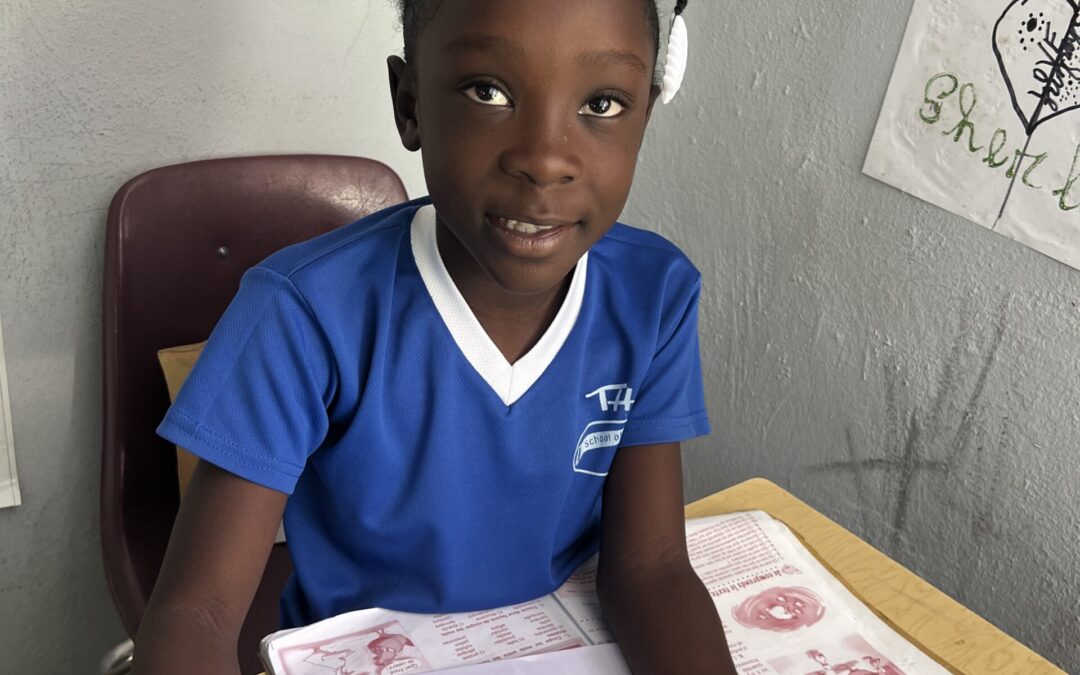
In Haiti, language is more than communication — it shapes access, confidence, and opportunity. For many students, navigating both French and Haitian Creole every day is simply part of growing up. But how those languages show up in education can either open doors or quietly create barriers that follow a child for life.
A History Written in Two Languages
Haiti’s dual-language reality is rooted in its colonial past. French became the language of power — used in government, institutions, and formal education. Haitian Creole emerged among enslaved Africans as a shared, living language that became the heartbeat of daily life, culture, and identity.
That history still shapes the classroom today. Creole is the language children speak at home. French is the language of textbooks, exams, and formal instruction. This isn’t just a linguistic divide — it determines who education serves best, and who it leaves behind.
When School Doesn’t Speak Your Language
Most children in Haiti arrive at school fluent in Creole, then are immediately expected to learn through French. The result is a hidden learning gap that has nothing to do with intelligence.
A student may grasp a lesson perfectly when explained in Creole, yet struggle when the same concept is tested in French. Education quietly becomes less about understanding and more about translation. Capable, curious children can appear behind — not because they can’t learn, but because the language of instruction doesn’t match the language of their life.
This affects reading comprehension, classroom participation, and something harder to measure: confidence. And confidence, once lost in a classroom, is difficult to rebuild.
Language and Opportunity in Haiti
The stakes go beyond the classroom. French fluency in Haiti is closely tied to professional pathways, higher education, and access to opportunity. Haitian Creole — spoken by virtually every Haitian — is often undervalued in formal academic spaces, despite carrying the full weight of the nation’s identity and cultural strength.
The result is an uneven playing field where language exposure, not ability, determines who gets ahead. Children from wealthier families with greater access to French instruction have a built-in academic advantage. Children from low-income communities, where Creole is the only language spoken at home, start school already at a disadvantage — through no fault of their own.
This is one of the reasons Haiti’s education crisis runs so deep. It’s not just about access to schools. It’s about what happens inside them.
How Teach Haiti Responds Differently
Teach Haiti exists to remove the barriers that keep children from fully accessing education — and language is one of the most significant. In communities like St. Michel and Port-au-Prince, many students come from homes where Creole is the only language spoken. Without intentional support, French-heavy instruction can quietly exclude the very students education is meant to serve.
Teach Haiti’s approach is built on a simple but powerful conviction: a child cannot fully learn what they cannot fully understand.
That means:
• Clarity before complexity — ensuring students grasp concepts in the language they know before bridging to French
• Intentional language development — strengthening both Creole comprehension and French literacy over time, without sacrificing one for the other
• Understanding over memorization — helping students grasp meaning before requiring language precision
• Confidence building — so students are never made to feel behind because of a language gap they didn’t create
This isn’t just a teaching strategy. It’s a commitment to equity.
Restoring Equity, One Student at a Time
When students are taught in ways that honor their first language while equipping them with French, something shifts. Learning becomes accessible instead of intimidating. Participation increases. Confidence grows. Students stop seeing themselves as behind and start seeing themselves as capable.
That shift changes everything — not just test scores, but how a child sees their own future.
A strong education system in Haiti doesn’t ask students to choose between languages. It uses both wisely — Creole to ground understanding, identity, and expression; French to open doors to broader academic and professional opportunity.
That balance is at the heart of what Teach Haiti does every day: meeting students where they are, and guiding them forward without leaving their language — or their potential — behind.
Frequently Asked Questions
What language is used in Haitian schools?
Most Haitian schools use French as the primary language of instruction, particularly in textbooks and exams. However, the majority of students speak Haitian Creole at home, which creates a significant language gap in the classroom.
Is Haitian Creole an official language?
Yes. Both French and Haitian Creole are official languages of Haiti. However, French has historically held more prestige in formal education and professional settings, while Creole remains the language of everyday life for most Haitians.
Why does language matter so much in education?
Research consistently shows that children learn best in the language they understand most deeply. When instruction happens in an unfamiliar language, students spend cognitive energy on translation rather than understanding — which slows learning and erodes confidence.
How does Teach Haiti address the language barrier?
Teach Haiti prioritizes comprehension over translation, using Creole to ensure understanding while intentionally building French literacy over time. The goal is to equip students with both languages without making either one a barrier to learning.
How can I help support education in Haiti?
One of the most direct ways to make a difference is by sponsoring a child’s education through Teach Haiti. Your support provides a student with consistent schooling, daily nutrition, and the tools they need to thrive.
You Can Be the Reason a Child Stays in School
Behind every language barrier is a child who is capable, curious, and full of potential — waiting for someone to believe in them enough to help clear the path.
When you sponsor a student through Teach Haiti, you’re not just paying school fees. You’re giving a child the chance to be understood, to grow in confidence, and to dream beyond the circumstances they were born into.
Sponsor a child today: www.teachhaiti.org/sponsor-a-student
Every child deserves to learn in a way that makes sense to them. Help us make that possible.