
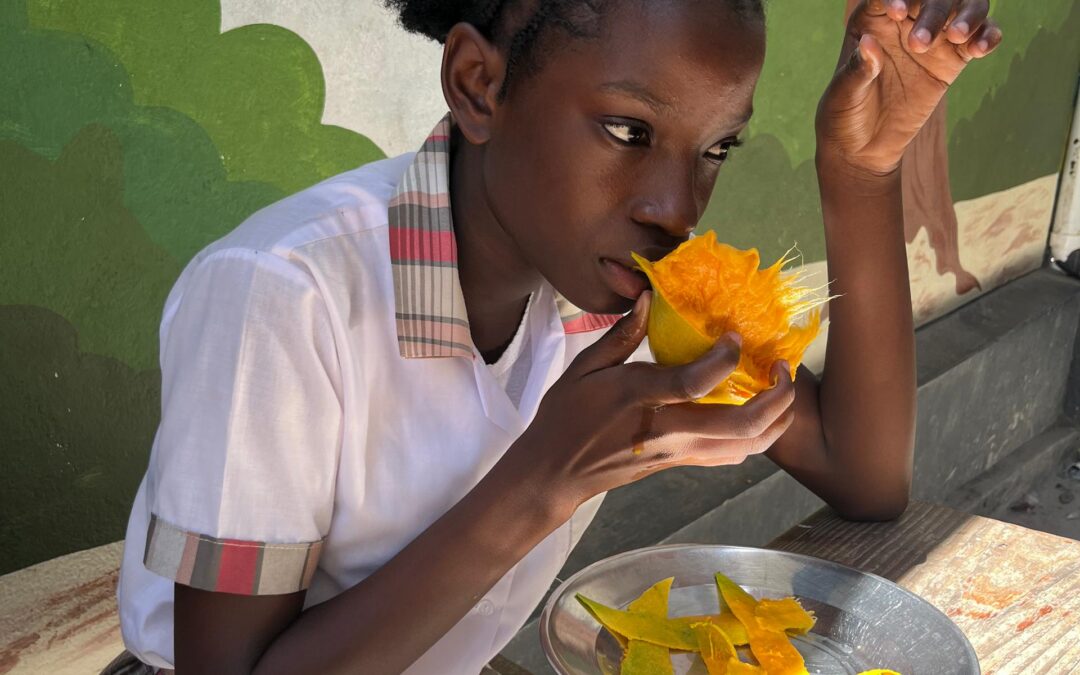
Did you know Haiti is home to more than 100 varieties of mangoes? Among them, one stands out above all others — the Madame Francis mango, a fruit so beloved it’s become one of Haiti’s most recognized agricultural exports.
Every year, as spring arrives across the island, something magical begins. Mango trees — lining roads, filling backyards, dotting hillsides — begin to bloom. Haiti mango season is not just a moment on the agricultural calendar. It is a cultural event, a source of livelihood, and for children across the country, one of the happiest times of the year.
The Madame Francis Mango: Haiti’s Most Famous Export
Of all the mango varieties in Haiti, the Madame Francis mango is the one that travels farthest. With its rich sweetness, bright golden skin, and smooth, nearly buttery texture, it has earned a devoted following in markets across the United States, Canada, and Europe.
Recognizable by its elongated shape and intensely fragrant flesh, the Madame Francis is prized not only for its taste but for how well it holds up during export. This combination of flavor and durability has made it the face of Haitian mangoes on the world stage — a fruit that carries the island’s warmth and agricultural richness across thousands of miles.
While the Madame Francis gets most of the global attention, it’s just one chapter of a much larger story. Haiti’s mango varieties span a stunning range of colors, flavors, and textures — from small, tart green mangoes eaten with salt to large, crimson-blushed varieties bursting with sweetness. Each community, each region, each season brings its own favorites.
When Is Mango Season in Haiti?
Haiti mango season typically runs from March through July, with peak harvest concentrated in April, May, and June. During these months, mango trees across the island become heavy with fruit, and mangoes hanging from branches become a defining image of the landscape.
Because Haiti has so many mango varieties — each ripening on its own schedule — mango season doesn’t feel like a single moment. It feels like a rolling wave of flavor and color washing across the country for months at a time. Early in the season, certain varieties ripen first; later, new ones take the stage. By the time July arrives, the last trees are still bearing fruit.
More Than a Fruit: Mangoes in Haitian Daily Life
In Haiti, mangoes are woven into the rhythms of everyday life in ways that go far beyond a grocery store aisle. They are food, income, and community — all at once.
A seasonal source of nourishment. During mango season, fresh fruit is everywhere. Families with mango trees in their yards have a reliable, abundant source of nutrition for months. Mangoes are eaten fresh, blended into juices, preserved, and shared with neighbors and extended family. For households that might otherwise struggle with food access, mango season is a season of genuine abundance.
Income and livelihood. Beyond home consumption, mangoes represent economic opportunity. Local vendors fill the markets. Farmers coordinate harvests for regional and international buyers. For many families, the mango harvest provides extra income that helps cover school fees and household expenses throughout the year. The tree in the backyard is not just shade — it is livelihood.
A living connection to the land. Many mango trees are decades old — passed down through generations, planted by grandparents, cared for by children and grandchildren. They root families to the land in a tangible, living way.
Childhood, Joy, and the Mango Tree
Ask any Haitian adult about their childhood memories of mango season, and you’ll hear the same story told a hundred different ways: climbing trees, racing friends to the ripest branch, eating mangoes straight from the fruit — juice running down your arms — while laughing in the afternoon heat.
For children in Haiti, mango season is one of the unambiguous gifts of the year. After school, neighborhoods fill with the sound of kids climbing trees and simply being children. It is joy in its most uncomplicated form — accessible, sweet, and shared.
Some of the most joyful moments of childhood in Haiti happen in the branches of a mango tree, with nothing needed but a good grip and a ripe fruit overhead. For many Haitians living abroad, the smell of a ripe Madame Francis is enough to transport them back home.
Mango Season at Teach Haiti
At Teach Haiti, mango season is always a special time with our students and school community. We see it each year as a living reminder of something we believe deeply: education is not only about what happens in a classroom.
Education is also about understanding the culture, rhythms, and resources of the community you come from. Mango season teaches children about agriculture, about patience, about abundance and sharing. It connects them to the land and to each other.
When we watch our students share mangoes on a school afternoon, we see the full picture of what it means to grow up in Haiti — the resilience, the joy, the beauty found in everyday moments.
A Final Thought
Haiti’s mango season is more than an agricultural event. It is culture. It is livelihood. It is childhood, memory, and community — all woven together in the branches of trees that have stood for generations.
The next time you see a Madame Francis mango in a market, pick it up. That golden fruit traveled a long way to reach you — from the hills and valleys of Haiti, from the hands of farmers and families, through mango season in all its abundance.
And with over 100 varieties waiting to be discovered, one Fun Fact Friday will never be enough. 🥭🇭🇹