
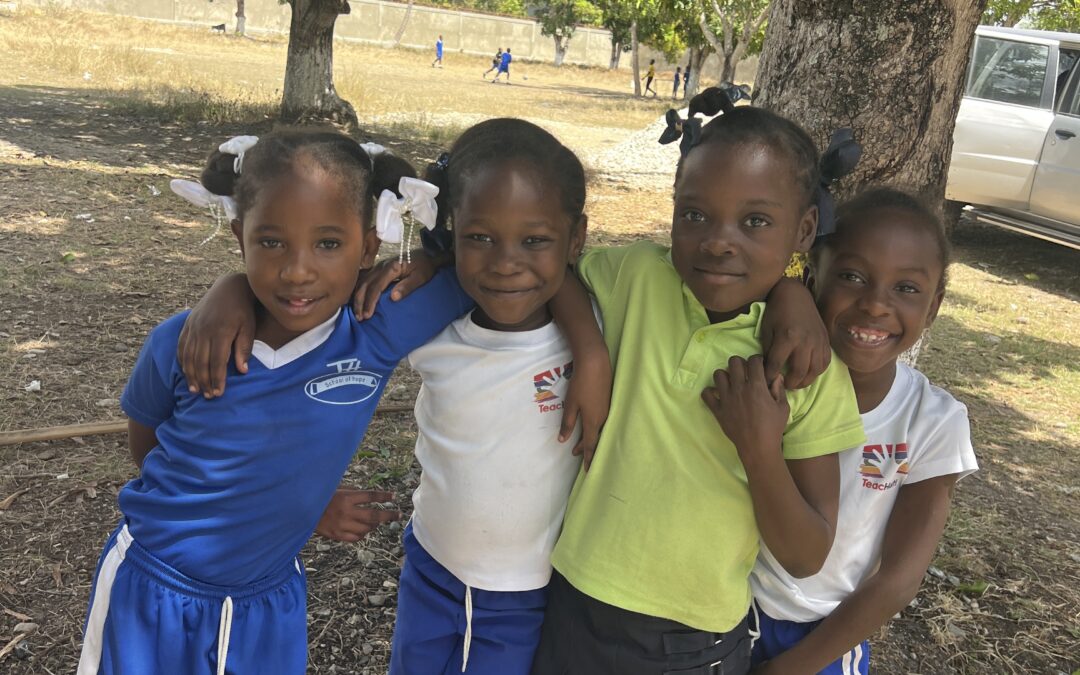
Education in Haiti is not free for most families—and that single fact shapes a child’s entire future.
While public education is a given in the United States, Haiti operates very differently. Nearly 90% of schools in Haiti are private, meaning families must pay for their children to attend.
When many Americans think about Haiti, they picture disaster headlines or political unrest. But Haiti is more than a headline—families want what most families want: a safe, stable future for their children.
Here are five realities about education in Haiti that most people don’t understand—and why they matter.
Why Education in Haiti is So Different
Unlike the U.S., Haiti does not have a widely accessible public education system. As a result, private schools fill the gap—but they come at a cost many families simply cannot afford.
For families living on just a few dollars a day, education becomes a financial decision rather than a guaranteed opportunity.
1. School Comes With Costs Most Families Can’t Afford
In Haiti, parents must pay for tuition, uniforms, books, and supplies. For families already struggling to meet basic needs, these costs are often out of reach.
Many parents work informal jobs or daily labor just to provide food and shelter.
What this means: A child’s future often depends on whether their family can afford school fees.
2. Being Enrolled Doesn’t Always Mean Learning
Even when children are enrolled, their education is often interrupted by financial pressure, safety concerns, or instability.
What this means: Children need more than access—they need consistency and stability to truly learn.
3. Staying in School Gets Harder Over Time
As children get older, the cost of education increases. Families are often forced to make difficult decisions about which children can continue.
What this means:
Many capable and motivated students never finish school.
4. School Quality Varies Significantly
Not all schools in Haiti provide a strong learning environment. Many face challenges such as overcrowded classrooms, inconsistent instruction, and limited resources.
In some cases, students experience harsh discipline and low academic standards.
What this means:
Access to school matters—but quality education matters just as much.
5. When Barriers Are Removed, Students Thrive
This is the most important reality: opportunity works.
When children have consistent access to quality education, support, and a safe environment, they don’t just get by—they excel.
How Teach Haiti Is Changing Education in Haiti
Teach Haiti provides a whole-child education model—removing financial barriers so families don’t have to choose which child can attend school.
Families contribute what they can, but most students are supported through sponsorship, making education accessible and consistent.
Founded by Miquette McMahon in 2007, Teach Haiti combines strong academics with structure, support, and encouragement in a Christ-centered environment.
The Results:
- 94% graduation rate (higher than the U.S. average)
- 100% national exam pass rate
- 10–20% higher test scores than the national average
This is what real change looks like: measurable outcomes, transformed lives, and students equipped for a better future.
Help a Child Access Education in Haiti
In Haiti, education isn’t free. Sponsorship is often the difference between staying in school—or falling behind.
For $45/month, you can provide education, stability, and hope for a child in Haiti.
Sponsor a student today and help change a future starting at just $45 a month.